
raritan river watershed project
Watershed: (n) The region of land that drains into a specified body of water, such as
a river, lake, sea, or ocean. Rain that falls anywhere within a given body of water's watershed
will eventually drain into that body of water.
“Watersheds are important to any community because they embody our sense of place
in the landscape
and their waters are important to our daily life.”
Center for Watershed Protection
[A watershed is] that area of land, a bounded hydrologic system, within which all living things
are inextricably linked by their common water course and where, as humans settled, simple logic
demanded that they become part of a community."
John Wesley Powell

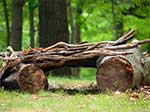
Photo by Michael Catania
Water touches all aspects of the natural environment as well as the political, social and economic facets of the human environment. As the demand for clean water grows and water issues gain increasing priority, communities are faced with difficult decisions about watersheds and their management, taking into account often conflicting demands of environmental protection and economic development.
The Raritan River Watershed Project (RRWP) is a course designed to introduce teens to the rich and varied life of the river and the watershed community that has evolved from it. The course will provide classroom and field-based environmental education opportunities designed to advance students’ appreciation for the natural world, promote understanding of the impact of human activity on the natural ecosystem, and foster a greater sense of environmental stewardship. The Raritan River Watershed provides a unique setting for this project, as it is the largest drainage area located entirely within New Jersey and has a history of intensive economic development dating from the start of the Industrial Revolution.
The course will include monthly field trips for the teens involved and corresponding evenings with experts that are open to the public. See our syllabus here.
Who can participate?
Most learning excursions are limited to 15 students aged 13-18 and accompanying parents or guardians that will assist with the carpooling. The evening programs are open to the public.
What will the project participants do?
- November 17th 7-8 pm. Initial meeting. Leaders will explain the goals of the project to student participants and parents, provide a schedule of evening activities and field trips and conduct some introductory, hands-on activities.
- November 20th 10 am-3 pm. First learning excursion. Students will take a driving tour of the watershed from the Headwaters to the Bay with lots of fun and interesting stops along the way.
- December 2010 – June 2011. Students will participate in one evening activity at the Schiff Nature Center and one learning excursioneach month to explore the Raritan Watershed from the headwaters to Raritan Bay. Guest leaders will teach about drinking water, major industrial and residential areas, critical habitats and agricultural/forest/wetland areas. Learning excursions will be hands-on. See the project syllabus for a complete list of topics, evening activities and learning excursions.
- August 15-19 2011. Week long summer camp focused on the RRWP, with daily learning excursions to sites throughout the watershed.
- September 2011. Students present their findings and stewardship recommendations in a public program at the Schiff Nature Preserve.
What good things will come of this?
- Students (and project leaders) will have fun!
- Students will learn from a variety of guest speakers and experts about the natural environment of the watershed, its history, and the effects of business and industry.
- Students will create and maintain a blog that they will use to chronicle their impressions and experiences throughout the program. This will be linked to the Schiff blog and allow others to “virtually” tag along.
- Students will identify one or more environmental problems in the watershed and develop an environmentally responsible action plan that can be implemented to improve stewardship and the overall health of the watershed.
- Students will present a public program at the Schiff Nature Preserve explaining the project findings and the plan for future actions.
What does this cost?
Thanks to a generous grant from the Edison Wetlands Association, some of the project expenses are covered. Thanks EWA!
Donations will be collected for evening activities. The learning excursions will cost $10 per student for Schiff members and $15 per student for non-members. If families pay for all eight at once, they can pay a reduced rate of $70 for members or $105 for non-members.
Who will run this project?
The RRWP will be overseen by a group of experienced environmental educators with many years of experience all over the world: Tanya Sulikowski, Schiff’s Executive Director and Bruce Taterka, Schiff Trustee, Mendham High School Environmental Science Teacher and Lead Teacher of the Science Department.
How can I learn more?
Schiff is the newest collaborator in the Sustainable Raritan River Initiative. Read all about the work that groups around the watershed are doing. You can also read abou the project on our blog.
|